


Cart
0

Quick Summary
Authentic motor culture clothing is built to survive garage work, starting with heavier fabric, pre-shrunk cotton, reinforced seams and a print that sits in the fabric rather than on top of it. Licensed or original artwork should carry clear trademark and copyright branding, and vehicle details like badges and body lines should match the real car.
- Look for heavier cotton, such as 4.2 oz. 100% Airlume combed and ring-spun cotton.
- Pre-shrunk fabric means less surprise shrinkage after the first wash.
- Shoulder taping and side seams help keep the shape from stretching out.
- DIGISOFT® print method keeps the graphic sitting in the fabric.
- Licensed tees carry a trademark notice and licensor name on the tag.
Table of Contents
- Why Most Garage Wear Falls Apart After a Few Months in the Shed
- Telling a Well-Made Graphic Tee from a Printed Cheapie
- Licensed Artwork, Original Designs and Getting the Vehicle Details Right
- Choosing Designs by Car Era, Body Style and Enthusiast Preference
- Muscle Car T-Shirts for Men: Fit, Fabric and Sizing That Works
- Graphic Hoodies for Men That Survive Real Work
- Wearing Automotive Streetwear Without Looking Like a Walking Decal
- Your Next Step: Pick a Tee for Your Next Shed Session
- Frequently Asked Questions
Why Most Garage Wear Falls Apart After a Few Months in the Shed
Let's be honest: you've bought a tee that looked brilliant on the hanger and then died a sad death after three washes and one encounter with a brake clean rag. Happens to everyone. Your shirt shrank, the print cracked like old paint, and the collar went wavy. Congratulations, you've been sponsored by a printing press and a dryer.
Thin fabric, rushed stitching and prints that sit on top of the cotton instead of in it are the usual culprits. Garage clothes take a beating, so they need to be built like they're going to get one.
What usually goes wrong:
- The fabric is too light and tears at stress points
- The print peels or cracks after a few washes
- The shirt shrinks, so the fit you bought is gone by wash two
- Oil soaks in and never comes back out
The fix is boring but useful: check the fabric weight, the print method and whether the garment is pre-shrunk.
Telling a Well-Made Graphic Tee from a Printed Cheapie
Here's a shortcut we'd rather you had than the trial-and-error we went through. A good motor culture clothing graphic tee announces itself before you wash it. Pick it up, look at the seams, feel the weight in your hand.
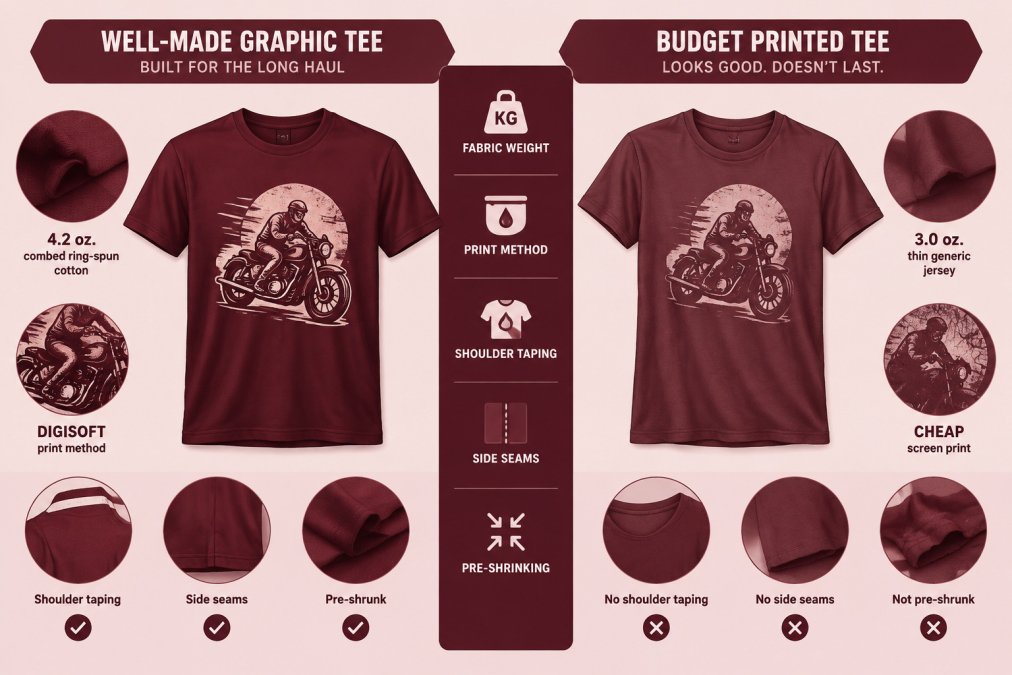
Look for these signs:
- Heavier cotton. Our Bella + Canvas tees use 4.2 oz. 100% Airlume combed and ring-spun cotton. That's a sturdier feel than the paper-thin stuff sold as "premium."
- Pre-shrunk fabric. Pre-shrinking means less surprise shrinkage after the first wash.
- Shoulder taping and side seams. These keep the shape from stretching out over time.
- A print method. DIGISOFT® is the print method used on these tees.
Here's a quick reference for the signs of a sturdier tee, using the details the article gives.
| Feature | What the article says | Why it matters |
|---|---|---|
| Cotton weight | 4.2 oz. 100% Airlume combed and ring-spun cotton | Sturdier feel than paper-thin "premium" stuff |
| Shrinkage | Pre-shrunk fabric | Less surprise shrinkage after the first wash |
| Seams | Shoulder taping and side seams | Keeps the shape from stretching out |
| Print method | DIGISOFT® | The print sits in the fabric rather than on top |
Licensed Artwork, Original Designs and Getting the Vehicle Details Right
Some graphic tees feature famous car brands, and that's where things get tricky. Licensed artwork comes with permission from the rights holder, while original artwork is designed from scratch. Both can be great, but you should know which one you're buying.
How to spot licensed versus original artwork:
- Look for a trademark notice. Licensed goods usually carry a small ™ or ® near the logo, plus a copyright line on the hang tag or inner label. If the tag is blank, that's a clue.
- Check the hang tag and neck label. Legitimate licensees print the licensor's name and often a licensing code. A plain white tag with no branding is a red flag.
- Ask where the art came from. Original designs are usually sold by the artist or brand directly. Licensed designs often appear across multiple retailers because the licensee distributes them.
- Compare the vehicle details. A licensed design typically has to pass an approval process, so the grille, badge, body line and wheel style should match the real car. If the proportions look off, it may be unlicensed fan art.
Vehicle details matter too. A badge, a body line or a wheel style that's slightly off will make a real enthusiast wince.
Choosing Designs by Car Era, Body Style and Enthusiast Preference
Not every enthusiast wants the same thing on their chest. Some folks live for the chrome-and-V8 muscle era, while others are into lowrider, hot rod or modern performance builds. Matching the design to your taste is half the fun.
Try thinking about it in three buckets:
- Era: Classic muscle from the late 60s and early 70s, or something newer
- Body style: Coupes, convertibles, pickups or wagons
- Preference: Show-quality restoration, race-inspired or garage-built custom
Wear the design that says something true about your build. Nobody in the shed cares if you're on the right team, as long as you're pulling your weight.
Muscle Car T-Shirts for Men: Fit, Fabric and Sizing That Works
Fit is where a lot of online orders go sideways. A "unisex" retail fit tee sits a little differently than a boxy one, so check the size chart before you click buy. If you're between sizes, size up for a relaxed fit or stick with your usual size for a closer cut.
Fabric matters just as much. Cotton jersey breathes well and takes a wash, which is exactly what you want when you're covered in oil by lunchtime. Heavier cotton holds its shape better than lightweight stuff that goes see-through under shop lights. Pre-shrunk fabric means less surprise shrinkage after the first wash.
Fit and fabric checklist:
- Compare measurements, not labels. Lay your best-fitting tee flat and measure chest width and body length, then match those numbers to the size chart. Label sizes vary wildly between brands.
- Check the fabric weight. 4.2 oz. combed and ring-spun cotton is a solid middle ground, sturdy enough for garage work, light enough to wear in summer.
- Look for shoulder taping and side seams. These keep the shape from stretching out over time, especially after repeated washing.
- Consider how you'll wear it. Under a jacket or hoodie, a closer cut works; on its own, a relaxed fit is more comfortable.
- Read reviews for notes on how the cut runs. A common pattern is that unisex retail fits run slightly narrow through the chest and slightly long in the body.
Stick to black, charcoal or navy if you want a shirt that hides the evidence. Lighter colors show every oil smudge, and while that's a badge of honor in some circles, it's not for everyone.
Quick sizing tips:
- Compare your best-fitting tee to the chart measurements
- Consider how you'll wear it, under a jacket or on its own
- Read reviews for notes on how the cut runs
Graphic Hoodies for Men That Survive Real Work
Tees get the spotlight, but a solid graphic hoodie is the layer you'll reach for on cold mornings in the shed. See our shop-tested hoodie picks for options that can take the grease.
Our Frankenparts design is for people who can turn a pile of spare parts into something useful.
Wearing Automotive Streetwear Without Looking Like a Walking Decal
Here's the trap: wear a shirt covered in car graphics from head to toe and you start to look like a sticker book. Keep it balanced. One loud graphic piece, paired with neutral pants and clean boots, reads as confident. Three loud pieces at once reads as a costume.
A few easy combos:
- Vintage oil tin tee with dark jeans and work boots
- Bio-mechanical scorpion tee under an open flannel
- Frankenparts hoodie over a plain black tee for a shop-to-street look
Let the graphic do the talking. The rest of the outfit just needs to stay out of the way.
Your Next Step: Pick a Tee for Your Next Shed Session
Ready to stop wasting money on garage wear that gives up after a month? Start with a tee built for the job. Check out the Oily Rag logo 1 tee at https://oilyragapparel.com/products/oily-rag-logo-1-unisex-jersey-short-sleeve-t-shirt for $31.99, the Vintage Oil Tin tee at https://oilyragapparel.com/products/vintage-oil-tin-unisex-jersey-short-sleeve-t-shirt for $35.99, or the Bio-mechanical Scorpion tee at https://oilyragapparel.com/products/bella-canvas-unisex-jersey-short-sleeve-t-shirt for $36.99. Pick the design that makes you grin and get it on your back before the next session.


Frequently Asked Questions
What makes motor culture clothing authentic?
Authentic motor culture clothing is designed by people who actually work on cars and bikes, not by people who only know the aesthetic. Look for fabric built to survive grease and repeated washing, reinforced stitching in high-wear areas, and a print that holds up after dozens of cycles. Designs should reference real vehicles accurately and show an understanding of the culture, such as shed life, mates helping mates and road-side kindness. If the brand can tell you what the garment is made of, that is a good sign it was made for real use.
How can you tell if automotive apparel is made for real enthusiasts?
Check whether the product details are specific. Real enthusiast apparel names the fabric weight, the cotton content, the fit and the print method rather than vague claims like premium quality. Brands made for enthusiasts also tend to get vehicle details right, including model years and body styles, and use graphics that reference actual car culture instead of generic flames and speed lines. Read the size chart too: brands that bother publishing one usually care about how the clothes fit a working body.
What should you look for in a durable graphic hoodie?
Start with the fabric weight and the knit, since heavier cotton blends hold their shape and resist pilling better in a garage. Check the seams and the cuffs for reinforcement, and look at how the print is applied. A print that is soft and flexible tends to crack less than a thick plastisol layer after repeated washing. Finally, consider whether the hood, pocket and neckline are built for daily wear, because a hoodie that gets worn under a jacket, around grease and into the car needs to handle all three.
How do you style automotive streetwear without overdoing it?
Pick one statement piece, usually a graphic tee or hoodie, and keep everything else plain in black, grey or denim. Let the artwork do the talking rather than stacking logos, patches and car references. For a casual day out, pair a classic car tee with dark jeans and sneakers. For a meet or shed session, layer a graphic hoodie over a plain tee and wear tough work pants. The goal is looking like someone who knows cars, not someone wearing their entire garage.


